



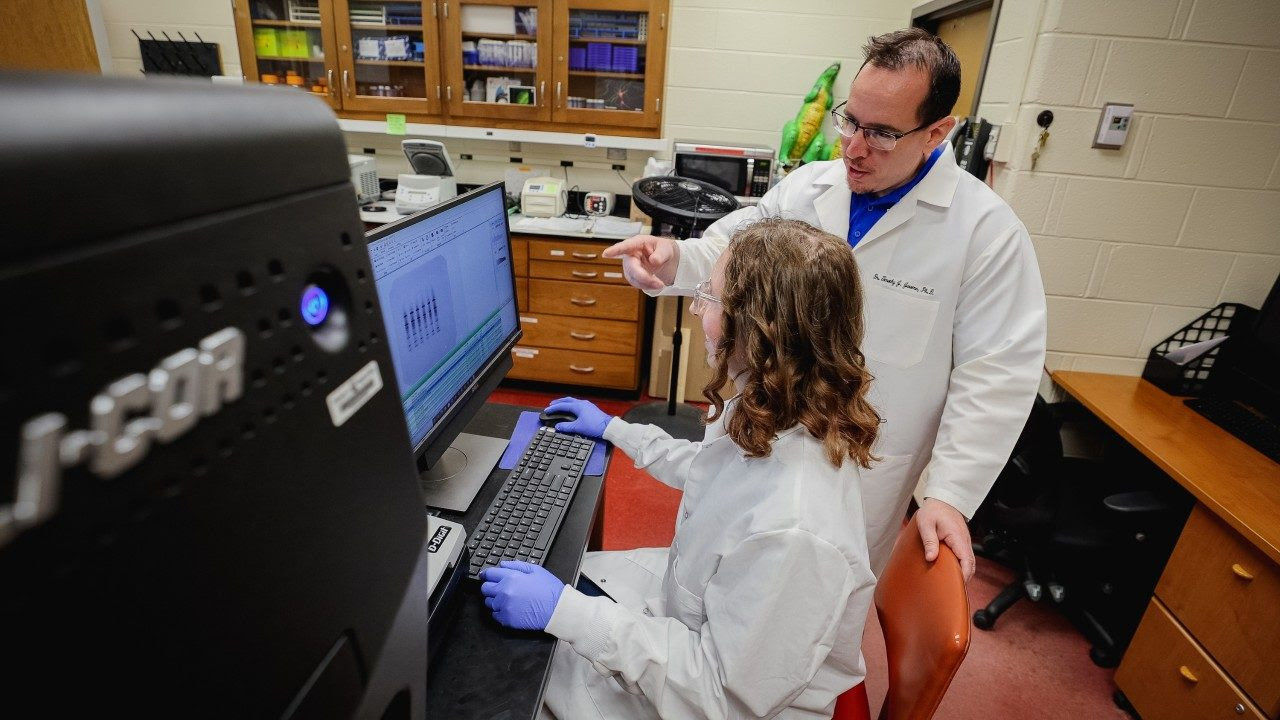
Virginia Tech researchers discovered a new function for a common protein in the brain — a development that sheds new light on the mysteries of the mind and holds promising implications for the treatment of memory loss and post-traumatic stress disorder.
The protein normally performs necessary housekeeping in the brain’s hippocampus by working as part of a larger protein complex called the proteasome to destroy other proteins.
But researchers in the College of Agriculture and Life Sciences’ School of Animal Sciences recently noticed this protein, called RPT6, behaving in a previously undetected way.
“We found that RPT6 is capable of this completely different function where it can bind to DNA and increase the expression of other genes or proteins during memory formation,” said Tim Jarome, associate professor of neurobiology. “This indicates that RPT6 plays a unique dual role in memory formation, both inside and outside the proteasome complex.”
The discovery, published this month in the Journal of Neuroscience, opens up new avenues for exploration of how RPT6 functions in the brain and how it could be manipulated to improve memory and alleviate memory disorders such as Alzheimer’s disease and post-traumatic stress disorder (PTSD).
The project was led by research scientist Kayla Farrell, who received her Ph.D. from the School of Animal Sciences in December. Farrell previously headed a study identifying a protein that could lead to better therapeutic treatment for women with PTSD.
Gene expression is critical to memory formation. It helps to build the neural networks needed to form and strengthen memories. Researchers don’t yet understand why RPT6 has this dual function or how it is helping to control the cells that are recruited to form a memory.
“There has to be something else that’s working with it to regulate gene expression,” Jarome said. “We are trying to understand now how it’s doing that.”
Ultimately, the discovery will be helpful to the ongoing research in Jarome’s lab, which focuses on understanding and treating memory disorders such as Alzheimer’s, dementia, and PTSD.
“This discovery is leading us somewhere new in unraveling the complexities of the brain and how we learn and store memories,” Jarome said. “We hope that this will help to inform new directions into understanding how gene expression is controlled during memory. In the long-term, this could lead to potential therapeutic targets for controlling and improving memory or treating maladaptive memories.”
Understanding the dual role of RPT6 provides insights into the complex processes of memory formation. This knowledge could pave the way for targeted therapeutic interventions to enhance memory or alleviate negative memories associated with conditions such as PTSD.
The study marks a crucial step in unraveling the complexities of the brain and gene expression control during memory formation. Researchers anticipate that further investigation into RPT6’s mechanisms will inform new directions for understanding memory at the molecular level.
Max Esterhuizen for Virginia Tech


